After stroke



Regaining Function & Independence
Stroke recovery requires a multidisciplinary approach to address mobility, self-care, and neuromuscular retraining. Ehucon's rehabilitation-focused products support this journey—from acute care to home recovery—with specialized tools that promote neuroplasticity while compensating for lingering deficits.
Early mobilization is critical for neurorecovery. Our solutions bridge the gap between therapist-assisted and independent movement:
Provides secure torso support during gait training without restricting arm swing
Features breathable mesh panels and adjustable straps to accommodate hemiparesis
Integrated handles allow therapists to modulate weight-bearing
Rotates 360° to practice weight shifts and sit-to-stand transitions
Builds lower extremity strength during directional changes
Addressing common post-stroke challenges like spasticity and neglect:
Angled designs compensate for limited supination
Regulates flow rate for safer swallowing
Contrast colors (orange/purple) enhance visual attention to affected side
Provide proprioceptive input during OT exercises
Transitioning from clinical to home settings presents unique challenges:
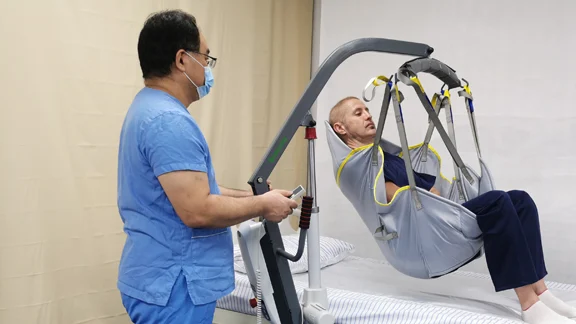
Assists with independent bed transfers
Enables single-caregiver repositioning
Progress Markers on slings and cushions allow therapists to document improvement in:
Sitting balance duration
Transfer independence levels
Weight-bearing symmetry
Products mimic real-life movements (e.g., rotating to reach objects)
Designs account for common post-stroke presentations like:
Pusher syndrome
Unilateral neglect
Flexor synergies
Modular components adapt as patients regain function
No account yet?
Create an Account